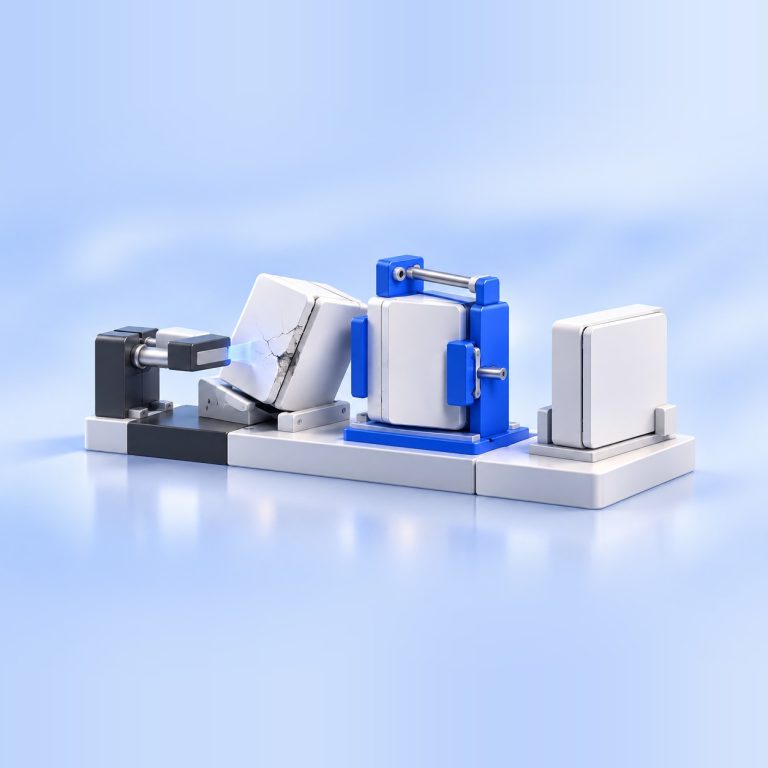

How AI-Driven MVPs Make ERP Modernization Faster and Safer
ERP modernization works best when an AI-driven MVP proves it on one process first: a side-car app beside your legacy ERP that automates invoice capture, demand forecasting or order intake and shows measured results inside a time-boxed pilot that we size at about 90 days. Gartner predicts that more than 70% of recently implemented ERP initiatives will fail to fully meet their original business goals by 2027, so the small, provable step is the safer one for a legacy ERP. For hands-on help with this, explore our ERP implementation services.
That does not mean skipping the hard work of legacy system modernization. It means sequencing it. Each ERP modernization MVP carves one workflow out of the old system, shows the business what it is worth, and funds the next slice. This guide covers how to pick the first process for ERP modernization, how the side-car works, where AI speeds up ERP transformation, and when the approach is the wrong call.
AI-Driven MVPs in ERP Modernization Defined
An AI-driven MVP in ERP modernization is the smallest production-grade application that uses AI to improve one ERP-connected process and can be measured against a baseline. It runs beside the legacy ERP, reads data through supported interfaces, and writes back only through approved paths.
ERP modernization is the work of updating how an ERP system is hosted, extended, integrated and used so it keeps supporting the business. Options run from upgrading in place and wrapping the legacy ERP with APIs to moving to a cloud ERP or replacing it. The MVP approach here sits at the wrap and extend end of that range. See also: AI in ERP.
Three phrases in that AI-driven MVP definition carry weight. Production-grade means real users and real transactions on the legacy ERP, not a demo. One process means one owner, one metric and one data domain. Beside the ERP means you are not editing core code, which keeps upgrades and audits manageable.
This differs from a product MVP, which tests whether customers want something. An AI-driven MVP tests whether a legacy ERP process improves enough to justify the next investment in ERP modernization. For the product-side version of an AI-driven MVP, see our guide on how to build an AI MVP that proves business value.
Three Starter MVPs for ERP Modernization
These three are common first picks for ERP modernization because they are high volume, easy to baseline and easy to run beside the legacy ERP. Before any ERP modernization work starts, check whether your ERP version already ships the feature, because a built-in capability beats a custom side-car.
| Starter MVP | What the AI Does | ERP Touchpoint | First Metric |
| AP invoice automation | Extracts invoice fields, suggests coding, flags likely duplicates | Reads vendors and purchase orders, creates draft invoices for approval | Share of invoices posted without manual keying |
| Demand forecast | Produces item-level forecasts from order history and outside signals | Reads sales and inventory history from the legacy ERP, sends a suggested plan to a staging table or planning API | Forecast error against the current method |
| Intelligent order intake | Reads emailed or PDF orders, matches customers and items | Reads customer and item masters in the legacy ERP, creates draft sales orders | Minutes from order received to order entered |
Why Big-Bang ERP Modernization Stalls
Big-bang ERP modernization stalls because it commits the whole budget before the business sees any evidence. Gartner ties ERP transformation shortfalls to technology-centric approaches that ignore stakeholder engagement, and McKinsey’s May 2026 analysis says only 25 to 35 percent of large technology programs achieve their targeted EBITDA and cash-flow impact.
Birmingham City Council is the cautionary tale for any ERP transformation. CIO.com reported in February 2025 that its Oracle program, started at about $48 million (£38 million) and was heading for an estimated total cost of about $114 million (£90 million), including re-implementation. The article points to weak governance, a lesson for any legacy ERP program: the council lacked the Oracle expertise to challenge its integrator, accepted extensive customizations against its own adopt-not-adapt rule, and accepted late change requests. Read next: ERP Implementation Success.
It is a public-sector case, but the pattern travels. Heavy customization and late scope change sink private ERP modernization and ERP transformation programs the same way. An AI-driven MVP changes the risk profile of ERP modernization: you spend a small, fixed amount, learn the real state of your data and ERP integration, and decide the next step with evidence.
There is a counterweight. McKinsey warns that agentic AI layered on top of ERP may hit a ceiling similar to robotic process automation, where structural process and data problems stayed in the core. Treat each AI-driven MVP as the first slice of a longer ERP modernization program, not a permanent bypass.
Choosing the First ERP Modernization MVP
Choose the first ERP modernization MVP by scoring candidate processes on five criteria, then start with the highest scorer that passes two hard filters: data readiness and isolation. This scorecard is Techverx practitioner judgment, not a published standard.
- Volume (1 to 5): enough monthly transactions that a change shows up within weeks.
- Pain (1 to 5): a cost, delay or error rate someone already tracks in the legacy ERP.
- Data readiness (1 to 5): records are complete enough for a model or rules to use today. A 1 or 2 here disqualifies the candidate.
- Isolation (1 to 5): the process can run beside the legacy ERP through supported interfaces. A 1 or 2 here also disqualifies it.
- Ownership (1 to 5): a business leader with budget who will use the result.
Add the five scores for each legacy ERP process. Start with candidates at 18 or more out of 25 that have no 1 or 2 on data or isolation. Lower scorers go on the ERP modernization roadmap, not into the first sprint of your ERP modernization MVP.
| Legacy ERP Candidate (Hypothetical) | Volume | Pain | Data | Isolation | Owner | Total | Decision |
| AP invoice capture | 5 | 4 | 4 | 4 | 4 | 21 | Start here |
| Demand forecast | 3 | 4 | 3 | 4 | 3 | 17 | Second wave |
| Month-end close reconciliation | 3 | 5 | 2 | 1 | 4 | 15 | Not now: lives in the core |
Scores above are illustrative for a hypothetical mid-size manufacturer, not a benchmark. Your own ERP modernization numbers will differ, and the argument over the scores is useful in itself.
If data readiness is what holds a candidate back, fix that first. AI-ready data work is a prerequisite for any AI in ERP, not a parallel track, and a clean data MVP is a legitimate first step.
Side-Car Design for Legacy ERP Integration
A side-car app is a separate AI-driven MVP component that sits next to the legacy ERP, reads its data through supported interfaces, applies AI, and returns results as drafts that the ERP’s own controls validate. It keeps the legacy ERP core unchanged, which protects upgrades, audit trails and vendor support during ERP modernization.
- Read through supported paths: for ERP integration, use APIs, scheduled exports or a replicated reporting copy. Avoid querying production tables directly.
- Write back as drafts: create unposted documents or suggestions that a person or the ERP workflow approves.
- Log everything: record each input, model version, output and human decision for audit, which matters most when AI in ERP touches financial records.
- Make writes idempotent: a retry in your ERP integration must never create a duplicate posting.
- Build a kill switch: one setting that returns the process to manual in minutes.
For legacy ERP, this is the first slice of the strangler fig pattern that Martin Fowler described in August 2024: build new functionality alongside the old system, move behavior over piece by piece, and use temporary transitional architecture so old and new coexist. Your AI-driven MVP side-car is that architecture, and the single process is the seam.
McKinsey argues the clean core stays critical for reliability, auditability, compliance and usability, and that a hybrid approach lets organizations realize value sooner while supporting a cleaner ERP core. A side-car is that hybrid in practice for ERP integration with AI.
ERP integration is where most side-cars succeed or stall in ERP modernization. If your legacy ERP has no clean interface, budget enterprise system integration work into the first sprint, because everything after it depends on that path.
Where AI Speeds Up ERP Transformation
AI in ERP speeds up ERP transformation in four places: understanding legacy logic, building prototypes, writing integration code and tests, and doing the process work itself, such as extracting invoice fields or forecasting demand. It does not remove the need for clean data, business owners or change management.
Faster Discovery of Legacy ERP Logic
In ERP modernization, AI assistants can summarize old custom code, report definitions and stored procedures into plain-language rules that a business owner can confirm. Someone who knows the legacy ERP must review the output, because models can misread behavior that was never documented.
Prototypes in Days, Not Quarters
With sample exports, an ERP modernization team can stand up a working extraction or forecasting prototype in days and put it in front of real users. The point of an AI-driven MVP is to see the exceptions early: the odd invoice layout, the customer who orders by phone, the item with no history.
Integration Code and Test Generation
For ERP integration, code assistants draft connectors, field mappers and test cases quickly. Treat that output as a draft in your legacy ERP modernization project. It still goes through code review, security scanning and regression tests, like any other code that touches the legacy ERP.
Consultancies make large claims about the effect of AI on ERP modernization. McKinsey’s May 2026 article says AI agents have the potential to cut ERP implementation effort by at least 50 percent and program duration by half. That is a projection for AI in ERP, not a measured result for your environment, so let your MVP baseline show what you actually get.
McKinsey’s State of AI 2026 survey (1,719 respondents in 97 nations, May to June 2026) shows why measuring AI in ERP matters. About 44% say AI is scaling across their enterprise, yet only 37% attribute at least some EBIT impact to AI and roughly 6% qualify as high performers.
A 90-Day Plan for ERP Modernization MVPs
A 90-day ERP modernization MVP runs in four gated phases: baseline and scope, prototype and integration, controlled pilot, and decision. The 90 days is Techverx practitioner judgment for a narrow process, and larger scopes take longer.
| Phase | Weeks | Output | Exit Gate |
| Baseline and scope | 1 to 2 | Measured baseline, one-page scope, named business owner | Owner signs the baseline |
| Prototype and integration | 3 to 6 | Working prototype on real data, read and write path to a test ERP | Agreed accuracy target met on held-out historical records |
| Controlled pilot | 7 to 10 | Live with a limited user group, human approval on every write | No open control or audit issues |
| Decision | 11 to 13 | Results against baseline, running cost, expansion options | Go, adjust or stop is recorded |
Scope Rules That Hold
- One process, one data domain, one business owner.
- No changes to ERP core code or schema.
- Human approval on every write during the pilot.
- A fixed end date and a written definition of success before build starts.
- Anything that does not move the metric goes to the backlog.
Microsoft’s Success by Design guidance for Dynamics 365 lists a defined cutover plan, including go/no-go criteria, and scheduled mock go-lives among its readiness items before go-live. Borrow that discipline for your ERP modernization pilot: rehearse switching the AI-driven MVP on and, just as important, switching it off.
Metrics That Prove ERP Modernization Value
Expand an ERP modernization MVP only when it beats its baseline on the metric you named upfront, holds that result across at least two month-end closes, and stays inside your control and audit rules. The two-close rule is Techverx practitioner judgment for any ERP transformation MVP.
- Touchless rate: share of legacy ERP transactions that need no human edit.
- Cycle time: hours or days from trigger to posted record in the legacy ERP.
- Exception and rework rate: how often people fix what the AI in ERP flow produced.
- Cost per transaction: include model usage, hosting and support time for the AI in ERP workflow.
- Forecast error: for planning MVPs, compare against the method in use today.
- Adoption: share of the target users working in the new AI in ERP flow, not beside it.
Count running costs in full against savings. An AI-driven MVP that saves ten hours a week and takes twelve hours of care is not ready to scale. Then choose one of three moves for your ERP transformation: widen the same MVP, add the next process from the ERP modernization scorecard, or retire the manual step in the legacy ERP.
Risks and Failure Modes in ERP Modernization
The main failure modes in AI-led ERP modernization and ERP transformation are bad source data, a side-car that becomes a permanent shadow system, unreviewed AI output reaching the ledger, and vendor updates that break the integration. Each ERP modernization risk has a specific control.
- Bad data in, bad output out: add a data quality gate before the model and fix errors at the source system.
- The permanent bypass: give every side-car around a legacy ERP a retire-or-absorb review within 12 months. That interval is practitioner judgment.
- AI errors in financial records: write drafts only, route low-confidence cases to people, and sample approved items for audit.
- Vendor update breakage: keep ERP integration on supported APIs and run contract tests on every ERP release.
- Customization creep: the Birmingham lesson for ERP modernization. Hold the scope rules when late requests arrive.
- Access and secrets: for ERP integration, give the service account least privilege and keep ERP credentials out of prompts and logs.
- Ignoring the people: the clerk whose keying task disappears needs a new role and early involvement.
When an ERP Modernization MVP Is the Wrong Call
An AI-driven MVP is the wrong call for ERP modernization when the legacy ERP has no supported integration surface, when every candidate process lives deep in the core, or when a vendor end-of-support date forces a migration inside the year. In those cases the budget is better spent on ERP transformation readiness.
- No interface and no budget to build one: start with API enablement for ERP integration, which is itself a sound first AI-driven MVP.
- Core-only processes: costing, consolidation and close often have no seam in a legacy ERP. Scope those inside the larger ERP transformation.
- Heavily regulated processes: if a legacy ERP change needs formal validation, plan that effort first.
- No business owner: an AI-driven MVP without an owner is a demo.
- Vendor feature already exists: enable the AI in ERP feature and measure it before building anything.
What to Do This Quarter for ERP Modernization
Run the scorecard with finance and operations leaders in one working session, then commit your first ERP modernization effort to a single candidate. The sequence below fits one quarter of ERP modernization work.
- Weeks 1 to 2: list five legacy ERP processes, score them, and pick one with an owner.
- Weeks 2 to 3: measure the manual baseline and confirm the ERP integration path with your ERP team.
- Weeks 4 to 9: build the AI-driven MVP side-car, pilot it with human approval, and log every decision.
- Weeks 10 to 13: compare the AI-driven MVP to its baseline, then decide to expand, adjust or stop.
The Short Verdict on ERP Modernization MVPs
Small, gated, measured ERP modernization beats a big-bang rewrite on risk, and an AI-driven MVP makes the small step faster to build. Pick one process, keep the core clean, and let the numbers decide what comes next in your ERP modernization.