
Modernize Without Betting the Business
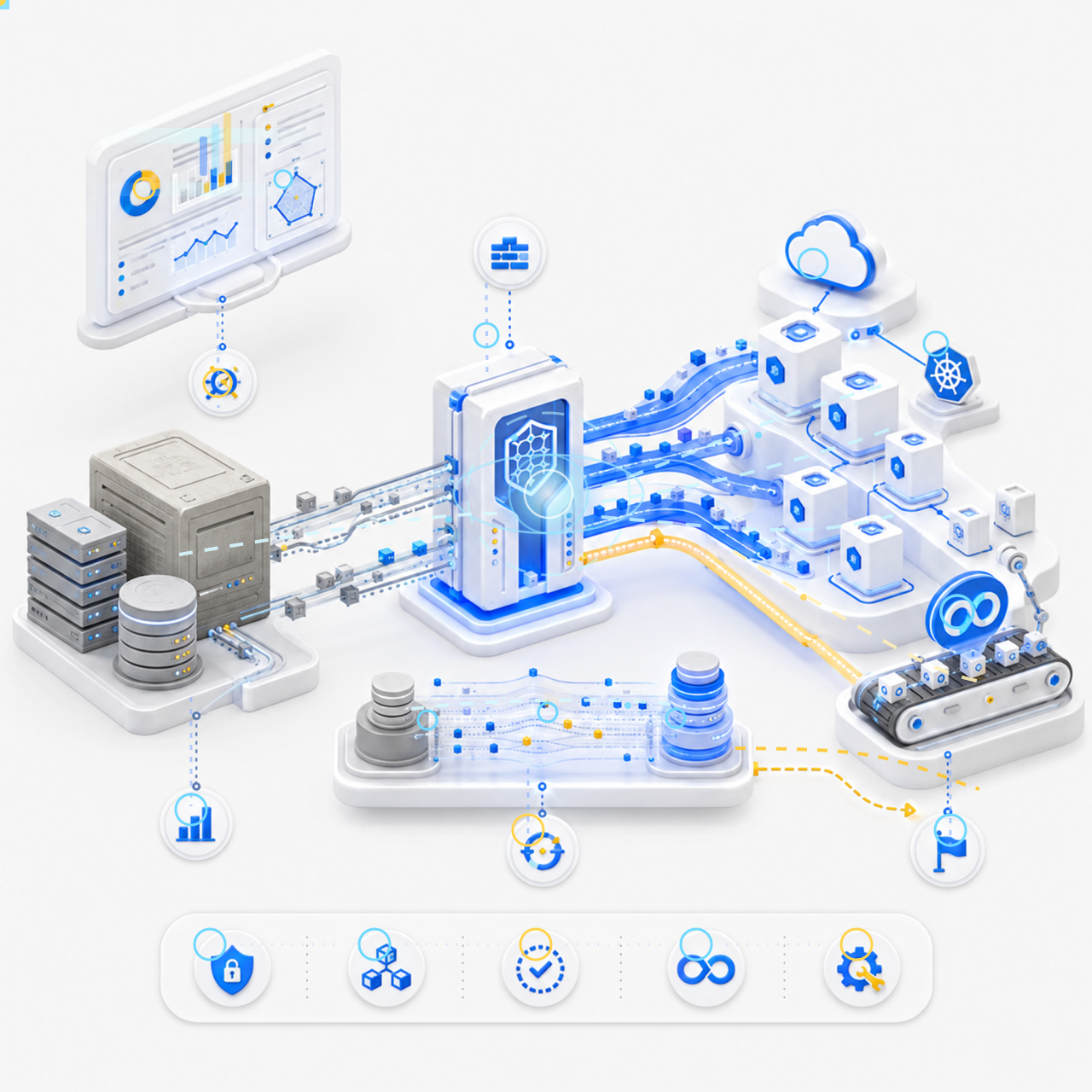
Incremental, validated, reversible — using the strangler fig pattern, because the real risk in modernization is data consistency during transition, not the new architecture underneath.
Nobody pays to touch a working system unless they're afraid of what happens if they don't
Data Consistency Is the Real Risk, Not New Code
The hardest part of any migration is keeping old and new systems correct at the same time. We solve that first, not last.
Data Readiness gate firstOne Irreversible Cutover Is One Too Many
We migrate in phases, with a rollback path at every stage because a single all-or-nothing rewrite isn't a risk worth taking when a safer path exists.
Phased Migration, Lower RiskThe System Has to Outlive the Project
Code your next engineer can't read is a liability we hand off, not a shortcut we take.
Built for Long-Term MaintainabilityArchitecture Layer
Four gates, in sequence. Nothing moves forward until the one before it clears.

Assessment Gate
Map what's fragile, load-bearing, and where the real data-consistency risk sits.

Facade Gate
Build the routing layer that lets old and new systems coexist safely.

Data Sync Gate
Resolve consistency between legacy and new systems explicitly, not by assumption.

Cutover Gate
Retire legacy components only once each dependent piece is proven in production.
The Five Properties Built Around Every System
Security
Access, data, and audit boundaries designed in, not patched after review.
Scalability
Headroom proven under real peak load, not estimated on paper.
Reliability
Defined failure behaviour and rollback for every cutover.
Maintainability
Code and docs the client's own team can safely change later.
Where modernization risk concentrates
Fintech
Core banking modernization where data-sync integrity is the primary constraint.
Retail
100x peak-traffic rebuilds via incremental cutover.
Healthcare
EHR-adjacent modernization where the legacy system stays authoritative until each module is proven.
Five steps, in order
Assess fragility and data-consistency risk.
Build the facade layer that lets old and new systems coexist safely.
Migrate one module at a time behind the facade, never the whole system at once.
Sequence cutovers by risk, validating each module in production before the next.
Retire legacy components only once every dependent piece is proven in production.
Frequently asked questions
The most important questions about Techverx and how we help teams move from strategy to production-ready systems.
Modernize the Part That's Actually Fragile, Not Everything at Once
We start by mapping what's load-bearing and where data consistency actually breaks, then sequence the cutovers around that, not around a rewrite calendar.
Book a Free Discovery Call