
Evolve Your Infrastructure with Legacy System Modernization
Book a Free Discovery Call
The platforms and clients we build with
Certified across the major clouds and trusted by enterprise teams to deliver AI that reaches production.










Turn your aging technology stack into a competitive advantage by aligning legacy reliability with modern speed.
Eliminate Tech Debt
Replace brittle codebases and outdated libraries with clean, maintainable microservices that reduce long-term maintenance overhead.
Cloud-Native Agility
Transition to serverless and containerized environments through cloud-native migration (Kubernetes/Docker) to achieve elastic scaling and rapid deployment cycles.
Fortified Security
Close legacy backdoors and implement modern Zero Trust architectures to protect sensitive enterprise data from modern cyber threats.
The Barriers We Remove Every Day
Legacy systems shouldn't be the anchor that stops your business from moving forward.
Unsustainable Maintenance Costs
Spending 80% of your budget just to 'keep the lights on' with ancient servers and code.
Cost OptimizationIntegration Deadlocks
Legacy software that refuses to communicate with modern APIs, CRMs, or Cloud suites.
InteroperabilityCritical Skill Gaps
Struggling to find developers who understand 20-year-old languages or deprecated frameworks.
Talent StrategySecurity Compliance Risks
Operating on systems that no longer receive security patches or meet GDPR/SOC2 standards.
CompliancePerformance Bottlenecks
Monolithic architectures that crash under modern user loads or peak holiday traffic.
ScalabilityOur Modernization Path
We follow a risk-mitigated, phased approach to ensure your business remains operational while the core is upgraded.
We perform a comprehensive technical audit of your existing codebase, identifying technical debt, security vulnerabilities, and performance bottlenecks to determine the best modernization path.
Our experts define a phased transition strategy choosing between rehosting, refactoring, or rebuilding aligned with your long-term business goals and ROI requirements.
We systematically transform your monolithic applications into modern, scalable microservices architectures using industry-best practices and automated unit testing.
Beyond the initial migration, we establish robust CI/CD pipelines and cloud-native monitoring to ensure your systems evolve with changing market demands.
Trusted by enterprise leaders
What decision-makers say about working with Techverx.



We worked with Techverx on the development of an application. Their team took on the task as though it was being developed for themselves. Their expertise, support and contributions were very key to the success. Techverx continues to be involved in further development for our company. I highly recommend their services.
 Director Information Technology — Postal Methods

We reached out to Techverx in March 2019 and asked them to provide us with a proof of concept for a new subsystem that we were building. They rose to challenge and delivered a great POC in the four week timeframe. Since, that time Techverx has been a great partner for us. They are an integral part of both our architecture and development teams.
 Head of Engineering — Lightpoint

Working with Techverx has been a great collaboration is more than an understatement. They are engaging, interactive and futuristic. The inhouse support is always there around the clock to keep us updated about the process.
 Head of Product Management — Drive

Techverx got us from a stuck pilot to a governed production system in a single quarter — they understood compliance as well as engineering.
Recent work, from concept to production
A look at systems we've designed, built, and shipped — with the outcomes they moved.
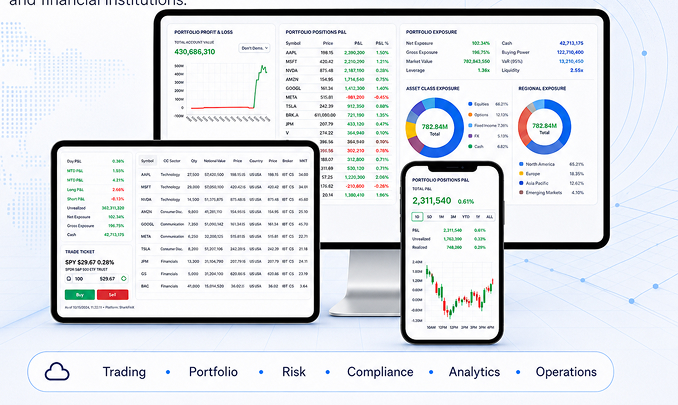

Modern FinTech Infrastructure for Trading and Operations
SharkFin is a cloud-based SaaS platform for hedge funds, family offices, and financial institutions, providing integrated trading, portfolio, risk, compliance, analytics, and operations capabilities.
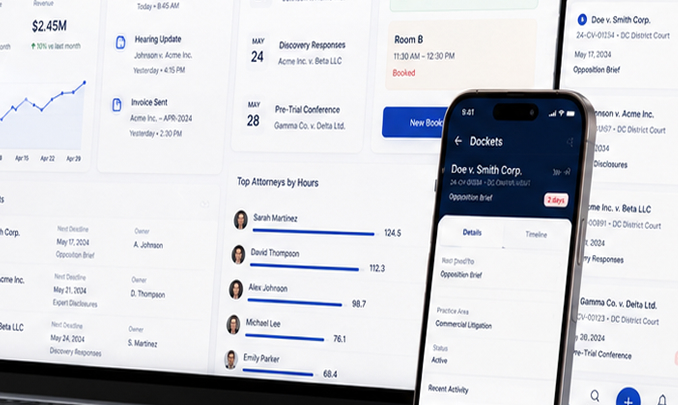

Future-Ready Banking Infrastructure for BMO Financial Group
BMO Financial Group is one of North America's leading financial institutions, serving millions of customers through a wide range of banking and financial services.
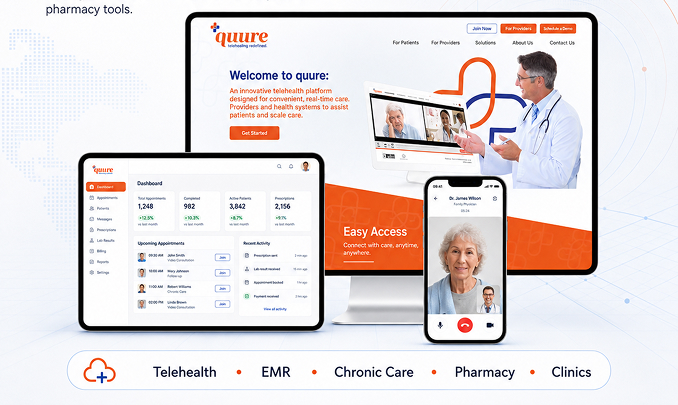

A SaaS based telehealth platform for clinics
Quure is an innovative telehealth platform designed to unify complex healthcare services through a single interface. It integrates EMR, chronic disease management, and pharmacy tools.
The Measured Value of Modernization
We don't just update code; we improve your bottom line and engineering velocity.
Average Reduction In Infrastructure Costs
Increase In Feature Deployment Speed
Critical Security Breaches Post-Modernization
Cloud Native Compatibility Achievement
Our Migration Stack
We leverage the world's most robust frameworks to build your modern foundations.
Application frameworks
Cloud & deployment
Data & integration
Interfaces & BI
Keep reading



Frequently asked questions
The answers to your questions