

The platforms and clients we build with
Certified across the major clouds and trusted by enterprise teams to deliver AI that reaches production.











Launch with clarity and scale with confidence using data-driven strategies that optimize acquisition, retention, and growth.
Validated Product-Market Fit
Test and validate your product with real users to ensure strong market demand before scaling.
Optimized Customer Acquisition
Reduce acquisition costs by targeting the right audience with high-performing channels and messaging.
Improved Conversion Rates
Increase user activation and conversion through optimized funnels and user journeys.
Unified Marketing Attribution
Track and measure performance across all channels with accurate attribution models.
Stronger User Retention
Improve engagement and lifetime value through targeted retention strategies.
Scalable Growth Frameworks
Build repeatable systems that support sustainable and predictable growth.
Solving Product Launch & Growth Challenges
We help organizations overcome challenges in market entry, customer acquisition, and scaling growth efficiently.
Market Noise & Competition
Products struggle to stand out in crowded markets without clear positioning and differentiation.
Product Positioning StrategyHigh Customer Acquisition Costs
Inefficient targeting and channels increase marketing spend without delivering results.
Optimized Acquisition StrategyLow Conversion Rates
Users drop off due to weak funnels and unclear value propositions.
Funnel Optimization & UX StrategyUser Churn & Low Retention
Poor engagement strategies lead to loss of users after initial acquisition.
Retention & Lifecycle MarketingLack of Data Visibility
Disconnected tools make it difficult to track performance and make informed decisions.
Unified Analytics & AttributionScaling Growth Inefficiencies
Growth becomes inconsistent without a structured and repeatable strategy.
Scalable Growth SystemsService Roadmap
We follow a structured approach to define, launch, and scale GTM strategies with measurable results.
Identify target audience and high-potential market segments.
Design acquisition and conversion funnels.
Execute GTM strategy with real-time performance tracking.
Refine funnels, messaging, and channels based on real performance data.
Scale successful channels for sustained growth.
Trusted by enterprise leaders
What decision-makers say about working with Techverx.



We worked with Techverx on the development of an application. Their team took on the task as though it was being developed for themselves. Their expertise, support and contributions were very key to the success. Techverx continues to be involved in further development for our company. I highly recommend their services.
 Director Information Technology — Postal Methods

We reached out to Techverx in March 2019 and asked them to provide us with a proof of concept for a new subsystem that we were building. They rose to challenge and delivered a great POC in the four week timeframe. Since, that time Techverx has been a great partner for us. They are an integral part of both our architecture and development teams.
 Head of Engineering — Lightpoint

Working with Techverx has been a great collaboration is more than an understatement. They are engaging, interactive and futuristic. The inhouse support is always there around the clock to keep us updated about the process.
 Head of Product Management — Drive

Techverx got us from a stuck pilot to a governed production system in a single quarter — they understood compliance as well as engineering.
Recent work, from concept to production
A look at systems we've designed, built, and shipped — with the outcomes they moved.
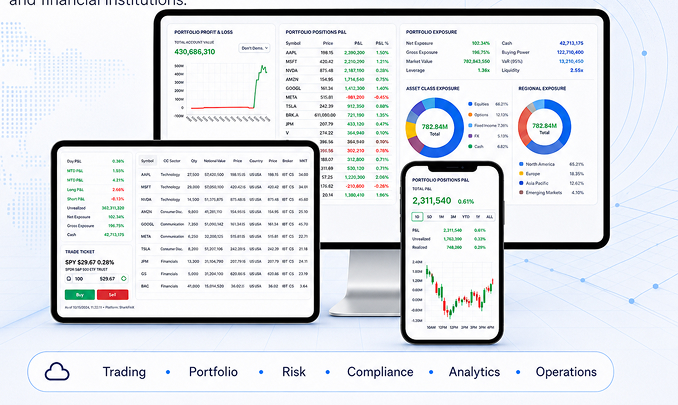

Modern FinTech Infrastructure for Trading and Operations
SharkFin is a cloud-based SaaS platform for hedge funds, family offices, and financial institutions, providing integrated trading, portfolio, risk, compliance, analytics, and operations capabilities.
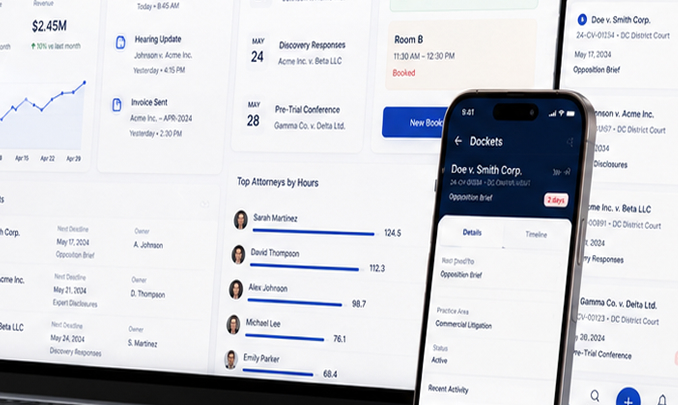

Future-Ready Banking Infrastructure for BMO Financial Group
BMO Financial Group is one of North America's leading financial institutions, serving millions of customers through a wide range of banking and financial services.
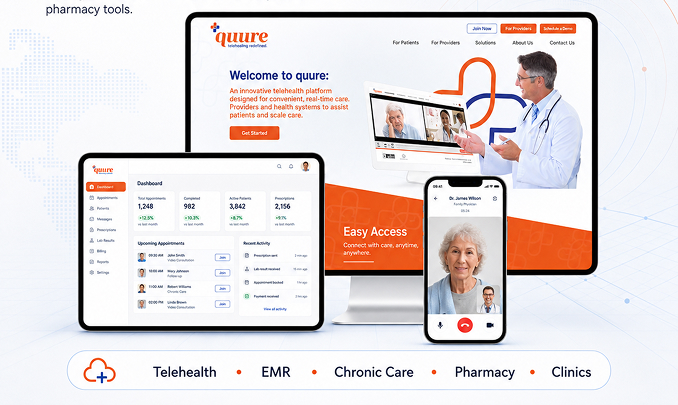

A SaaS based telehealth platform for clinics
Quure is an innovative telehealth platform designed to unify complex healthcare services through a single interface. It integrates EMR, chronic disease management, and pharmacy tools.
Outcomes that drive growth, efficiency, and innovation
Accelerate growth, reduce acquisition costs, and maximize ROI with a structured GTM strategy.
Increase in ROAS
Reduction in CAC
Higher Conversion Rates
Wasted Marketing Spend
Proven tools, chosen for the problem
We use established technologies, frameworks, and machine learning tooling to deliver high-performing, custom AI systems across industries.
Models, pipelines and stores
Cloud & deployment
Application layer
Interfaces & BI
Keep reading



Frequently asked questions
The answers to your questions