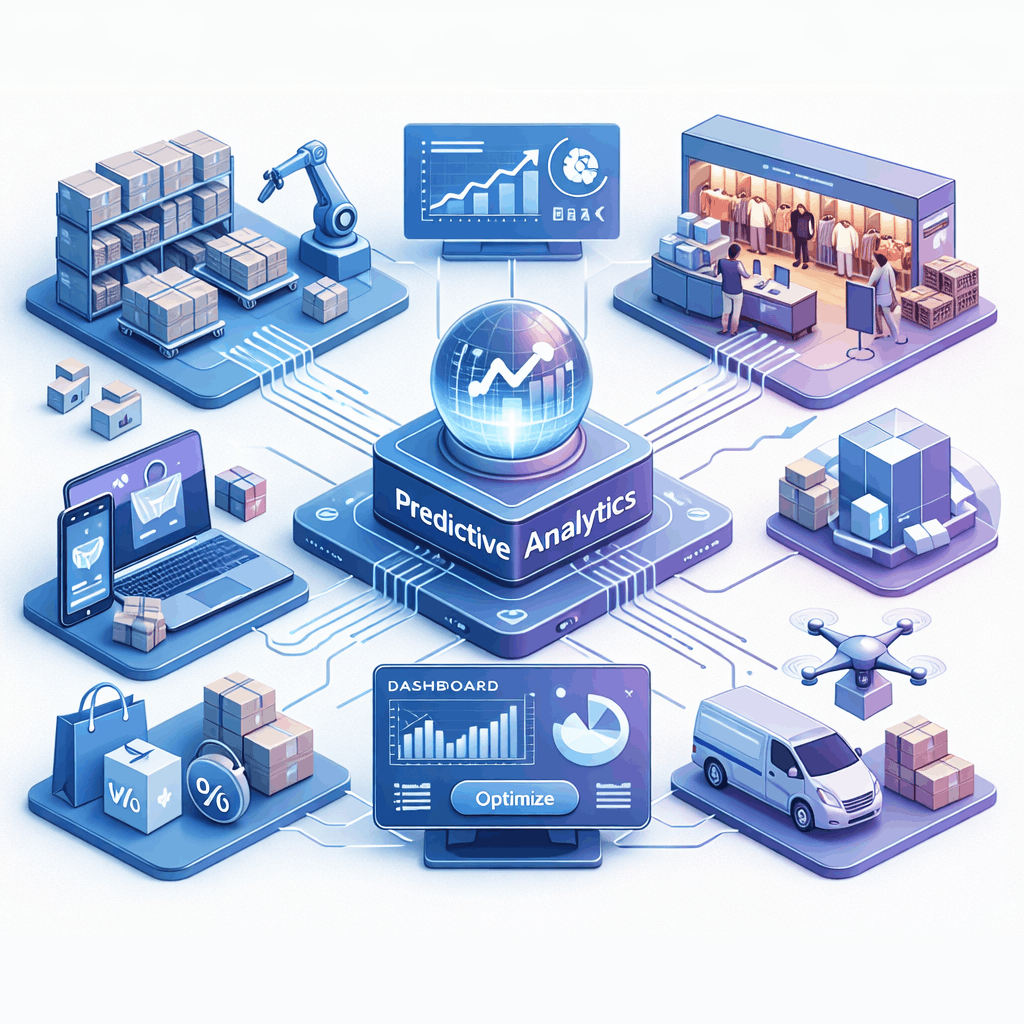
Retail Inventory Optimization with Predictive Analytics

Retail Inventory Optimization with Predictive Analytics
Predictive analytics has become a game-changer in modern retail. With customer behavior evolving across multiple channels and demand patterns shifting rapidly, businesses that leverage predictive insights can anticipate outcomes, reduce uncertainty, and drive consistent revenue growth. This guide dives deep into predictive analytics for retail sales, offering practical strategies, models, and insights that help optimize operations, pricing, inventory, and customer engagement.
Understanding Predictive Analytics in Retail
Predictive analytics in retail uses statistical models, machine learning, and historical data to forecast future sales, product demand, inventory needs, and customer behavior. Unlike descriptive analytics, which tells you what happened, or diagnostic analytics, which explains why it happened, predictive analytics provides actionable foresight, allowing retailers to make smarter, data-driven decisions.
When implemented correctly, predictive analytics helps businesses reduce waste, prevent stockouts, and improve revenue performance by aligning operational decisions with real demand.
Why Predictive Analytics Matters for Retail
Retail operates on thin margins and high volatility. Predictive analytics minimizes risk by replacing intuition-based decisions with data-backed strategies. Accurate forecasts help optimize inventory, pricing, and promotions while improving customer experience. Businesses using predictive analytics can expect:
- Improved sales forecast accuracy
- Higher inventory turnover and reduced excess stock
- Optimized promotional and pricing strategies
- Enhanced customer retention and loyalty
By understanding patterns in customer behavior and demand, predictive analytics turns uncertainty into actionable opportunities.
Key Retail Use Cases for Predictive Analytics
Sales Forecasting Across SKUs, Stores, and Channels
Sales forecasting uses historical data, seasonality, promotional activity, pricing changes, and local trends to predict future demand. Advanced forecasting models allow retailers to plan at multiple levels, SKU, category, store, and channel, ensuring resources are allocated efficiently.
Dynamic forecasting, updated in near real-time, ensures retailers can react to emerging trends and market changes without delays.
Demand Forecasting and Inventory Optimization
Inventory misalignment leads to lost revenue and wasted capital. Predictive demand models help retailers determine optimal stock levels, placement, and replenishment timing. Incorporating supplier lead times, demand volatility, and product shelf-life ensures the right products are available at the right time, minimizing overstock and stockouts.
Pricing Strategy and Promotion Optimization
Predictive analytics enables retailers to understand price elasticity and forecast customer response to discounts, bundles, and promotional campaigns. Data-driven pricing strategies maximize revenue and margins while maintaining sales volume. By modeling promotion lift and post-promotion demand decay, businesses can plan campaigns with confidence.
Customer Behavior and Lifetime Value Prediction
Predictive models identify high-value customers, anticipate churn risk, and uncover upsell or cross-sell opportunities. Retailers can tailor messaging, timing, and offers to individual customer segments, increasing repeat purchases and lifetime value.
Omnichannel Demand Planning
Modern retail requires seamless coordination across in-store, online, mobile, and marketplace channels. Predictive analytics provides unified insights, helping retailers optimize inventory across channels and enable services like buy-online-pickup-in-store or ship-from-store without inventory conflicts.
Data Foundations for Accurate Predictions
Internal Retail Data
Reliable predictions start with clean, structured internal data: point-of-sale transactions, product catalogs, pricing history, inventory levels, supplier information, and customer profiles. Consistency across these systems is critical for accurate modeling.
External and Contextual Data
External variables like weather, holidays, local events, and economic indicators significantly impact demand. Incorporating these signals refines forecasts and identifies patterns not visible in historical sales data alone.
Real-Time Data Pipelines
Static monthly reports are insufficient for fast-moving retail environments. Real-time data pipelines allow forecasts to update continuously, enabling businesses to respond instantly to market changes.
Predictive Modeling Techniques
Time Series Forecasting
Time series models capture trends, seasonality, and cyclical patterns, forming the foundation for accurate demand forecasting.
Regression and Elasticity Models
Regression models quantify relationships between sales and influencing variables such as price, promotions, and marketing spend. This enables scenario planning and smarter decision-making.
Machine Learning for Complex Patterns
Machine learning uncovers non-linear patterns and hidden relationships across large datasets. These models are ideal for high-SKU environments and complex customer behaviors.
Ensemble Modeling
Combining multiple predictive models into ensembles improves accuracy and reduces bias, ensuring stable forecasts across varying conditions.
Ready to Forecast Demand Accurately?
We help retailers implement predictive analytics that ensures inventory meets real-time customer demand while reducing costs.
Measuring Retail Impact
Predictive analytics impacts retail through clear, measurable outcomes:
- Forecast Accuracy: Reduces lost sales and overstock costs
- Inventory Efficiency: Optimizes working capital and stock turnover
- Margin Improvement: Maximizes revenue through optimized pricing
- Customer Retention: Increases loyalty and repeat purchases
By connecting predictive insights to operational processes, businesses can drive tangible growth and efficiency.
Implementation Strategy
Focus on High-Impact Use Cases
Start with use cases that deliver immediate ROI, such as top-category demand forecasting or key promotional campaigns. Early successes build confidence and justify scaling predictive analytics across operations.
Integrate Insights Into Daily Operations
Predictions are only valuable when embedded into workflows. Integrate forecasts with replenishment systems, pricing tools, and merchandising calendars to enable automated, actionable decisions.
Maintain Data Quality and Talent
Accurate predictions rely on clean data and skilled analysts who understand both retail operations and predictive modeling techniques. Continuous monitoring, documentation, and model improvement ensure long-term effectiveness.
The Future of Predictive Retail Analytics
Predictive analytics is evolving toward prescriptive intelligence, where systems not only forecast outcomes but recommend actionable steps. With AI and machine learning advancements, retailers can automate pricing, replenishment, and personalized customer experiences, reducing manual effort while maximizing efficiency and profitability.
Conclusion
Predictive analytics transforms retail data into actionable insights that drive smarter, revenue-focused decisions. From demand forecasting and inventory optimization to pricing strategies and customer behavior prediction, businesses can reduce waste, increase margins, and build long-term growth.
Investing in predictive analytics equips retail businesses to stay competitive, agile, and customer-focused in an ever-changing market.

Amanda Hill
Amanda Hill is a Technology Implementation Specialist at Techverx, where she combines her expertise in data analysis, digital transformation, and project management to bring complex ideas to life. Passionate about innovation and operational efficiency, she helps clients seamlessly execute technology solutions that drive measurable impact.
Hiring engineers?
Reduce hiring costs by up to 70% and shorten your recruitment cycle from 40–50 days with Techverx’s team augmentation services.
Related blogs