
How Retail Chatbots Can Personalize the Shopping Experience

Shoppers expect quick, helpful responses, and brands are turning to Conversational AI to deliver exactly that. Retail chatbots have become a popular tool for creating instant, meaningful customer interactions. Let’s explore how these intelligent assistants are transforming the way companies engage with their shoppers.
As online shopping continues to surge with global retail sales projected to reach $32.8 trillion by 2026, retailers are seeking innovative ways to enhance engagement and make every customer journey feel personal. One solution gaining traction is the AI chatbot for retail.
In this blog, we’ll dive into how AI-driven customer support tools like retail chatbots can revolutionize the shopping experience, making it more enjoyable, convenient, and deeply personalized.
What Is a Chatbot for Retail?
Retail chatbots are automated shopping assistants powered by Conversational AI and NLP in retail that can answer FAQs, recommend products, handle orders, and engage customers in human-like conversations. These bots are designed to enhance the shopping experience by providing support that feels intelligent and intuitive.
They can be seamlessly integrated into websites, mobile apps, and popular messaging channels like Messenger, Instagram, Viber, WhatsApp, and KakaoTalk, enabling a unified, omnichannel shopping journey.
By guiding customers through the buying process, these AI chatbots help reduce cart abandonment and ensure instant responses at every touchpoint. They’re the bridge between customer expectations for fast, 24/7 service and retailers’ need for scalable, consistent engagement.
44% of consumers appreciate chatbot platforms for helping them find product information before a purchase. 60% of Millennials are comfortable purchasing directly through chatbots.
This growing comfort and trust in AI-assisted interactions is fueling a new era of AI-driven customer support in the retail industry.
Types of Chatbots for the Retail Industry
Shopping chatbots generally fall into two main categories, each designed to address specific customer needs and enhance the overall buying journey.
1. Rule-Based Chatbots
Rule-based chatbots operate on predefined flows and decision trees, responding to user queries based on a structured set of rules. While they don’t use learning algorithms, they excel at handling routine requests such as order tracking, store hours, or return policies.
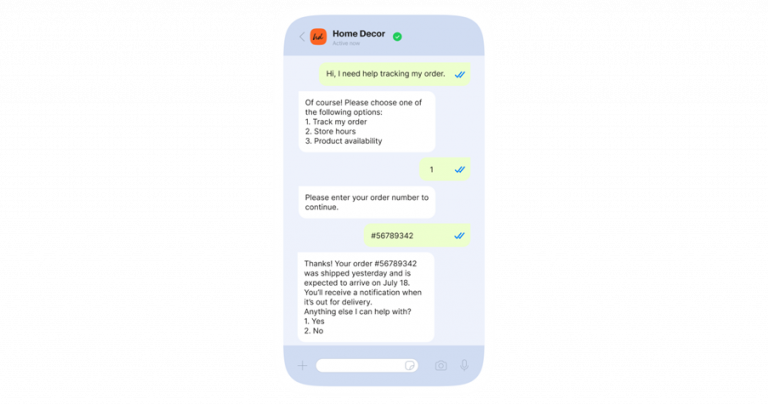
Imagine your business receives hundreds of inquiries about delivery times or refund procedures daily. A rule-based chatbot can automatically handle these repetitive questions, ensuring round-the-clock consistency and freeing human agents to manage more complex cases.
Benefits include:
- Scalability: Can manage high query volumes during peak shopping events like Black Friday or Cyber Monday.
- Customization and Control: Retailers define every rule, keeping responses aligned with brand tone and values.
- Cost Efficiency: Reduces reliance on human agents, cutting operational expenses.
- Quick Deployment: Easy setup with minimal configuration time.
2. AI-Powered Chatbots
AI-powered chatbots take personalization to the next level. Using Conversational AI, machine learning, and NLP in retail, these chatbots interpret customer intent, learn from interactions, and continuously improve over time.
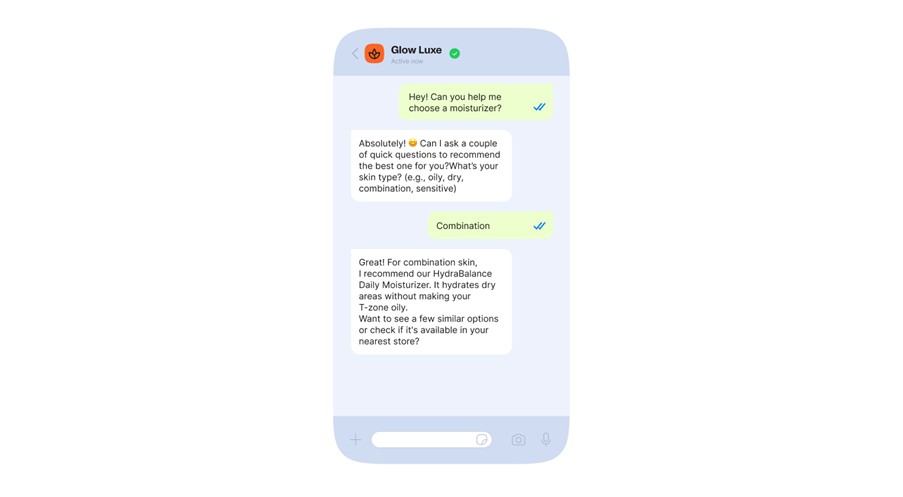
For instance, in the beauty sector, an AI chatbot can ask about a customer’s skin type, suggest tailored products, offer usage tips, and even recommend complementary items. This creates a dynamic, data-driven shopping experience that mirrors a real in-store consultation.
Key benefits include:
- Continuous Learning: Algorithms help the chatbot evolve with each interaction, enhancing accuracy and empathy.
- Data-Driven Insights: Chatbots collect valuable behavioral data, enabling retailers to refine marketing, optimize conversions, and predict trends.
- Personalized Experience: From curated recommendations to loyalty rewards, these bots make every shopper feel understood and valued.
A Step Further: Agentic AI
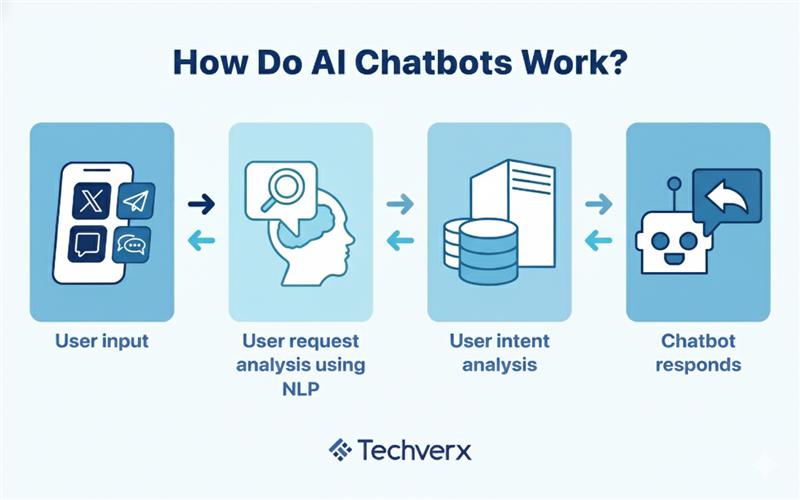
Agentic AI marks the next evolution of Conversational AI, moving from reactive assistance to proactive engagement. These advanced chatbots can make decisions, execute actions, and guide customers across multiple channels, without waiting for explicit prompts.
They handle complex workflows autonomously and collaborate with human agents when needed, ensuring a seamless handoff and faster resolution.
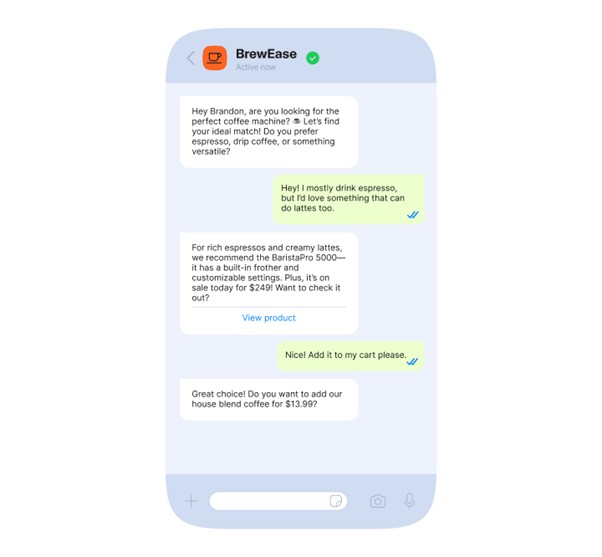
Picture this: a coffee brand’s chatbot asks if a user prefers espresso or drip coffee. Based on the answer, it recommends the perfect coffee machine, applies a promotional discount, and even offers a matching coffee blend, all within one conversation. That’s AI-driven customer support at its finest, intelligent, personalized, and human-like.
Chatbot Use Cases in Retail
The power of AI chatbots becomes clearer through real-world results:
- Unilever: 14x Higher Sales: Unilever used a chatbot campaign to promote its products in a conversational, relatable way, resulting in 14x higher product sales.
- Salmoiraghi & Vigano: 100% CSAT Score: The Italian eyewear brand used WhatsApp chatbots to personalize support and boost satisfaction, achieving a perfect customer score.
- Farm Superstores: 60% Cost Reduction: By deploying a WhatsApp Business chatbot, Farm Superstores reduced repetitive agent workload, cutting operational costs by 60%.
These success stories prove that AI-driven customer support not only improves service but also drives measurable business growth.
Tips and Best Practices for Chatbots in Retail
- Define Clear Goals: Understand your business objectives and customer pain points before implementation. A chatbot built with purpose ensures better results.
- Craft a Brand-Aligned Persona: Consistency is key. Your chatbot’s tone should reflect your brand’s personality, whether it’s professional, witty, or friendly.
- Choose the Right Partner: Look for providers with proven expertise in Conversational AI and NLP in retail. Platforms like Infobip’s Conversational Experience Orchestration Platform (CXOP) integrate agentic AI with unified data and automation, allowing businesses to craft adaptive, goal-oriented interactions.
This unified approach lets humans and AI collaborate efficiently, reducing response times, improving customer engagement, and scaling personalization with ease.
Let’s redefine your retail experience together
Talk to Techverx’s AI experts today and discover how intelligent chatbots can transform your customer journey from first click to checkout.
The Future of Retail Is Conversational
The retail landscape is rapidly evolving, and the future belongs to experiences that feel human, intelligent, and instant. Chatbots are no longer simple responders; they’re becoming proactive digital sales assistants that learn, adapt, and personalize at scale.
By combining Conversational AI, NLP in retail, and AI-driven customer support, brands can transform how they connect with shoppers, turning transactions into relationships and engagement into loyalty.
Why Techverx
At Techverx, we’ve spent years helping retailers modernize their customer engagement ecosystems, transforming legacy chatbots into intelligent AI agents that think, learn, and act. Our expertise lies in integrating Conversational AI and NLP in retail to create seamless omnichannel experiences that drive measurable growth.
Whether you’re looking to upgrade your existing chatbot, automate your customer support, or build an AI-driven retail assistant from scratch, our team can help you bring it to life, faster, smarter, and at scale.

Rachel Kent
Rachel Kent is a Technology Advisor at Techverx based in McKinney, Texas, specializing in digital strategy, scalable architectures, and “right-fit” solutions. With a background as a Software Engineering Lead and full-stack engineer across healthcare and tech, she bridges business goals with modern stacks to rescue stalled projects, modernize legacy systems, and deliver ROI-focused outcomes.
Hiring engineers?
Reduce hiring costs by up to 70% and shorten your recruitment cycle from 40–50 days with Techverx’s team augmentation services.
Related blogs