Table Of Content
End-to-End Hyper Automation in Retail Supply Chains: Building Intelligence into Every Touchpoint

End-to-End Hyperautomation in Retail Supply Chains
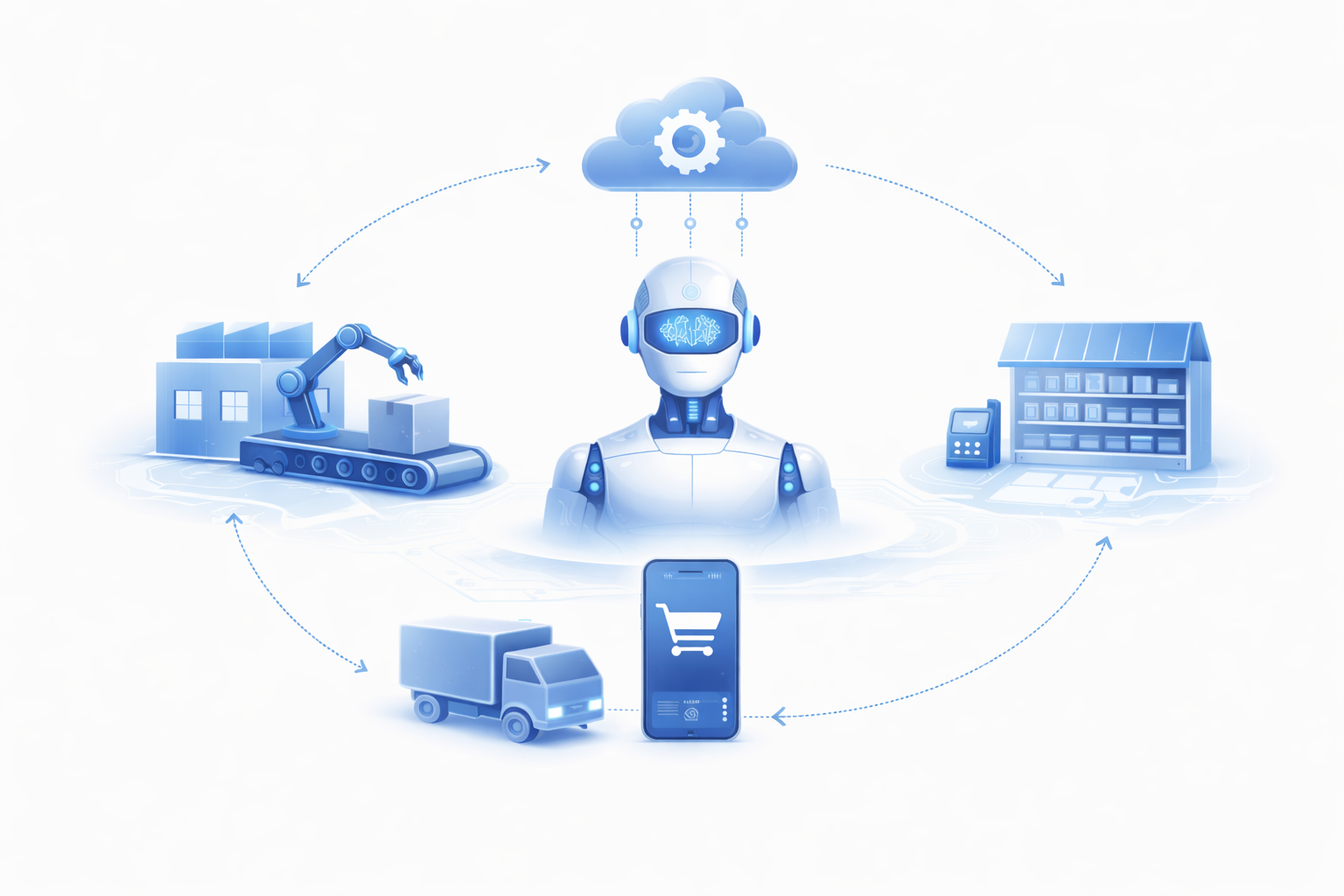
The retail supply chain has evolved from a simple linear process into a complex ecosystem where milliseconds matter and customer expectations shift daily. Traditional automation addressed isolated problems, but point solutions create data silos and disconnected systems. The answer isn’t more automation, it’s smarter, interconnected automation spanning the entire supply chain.
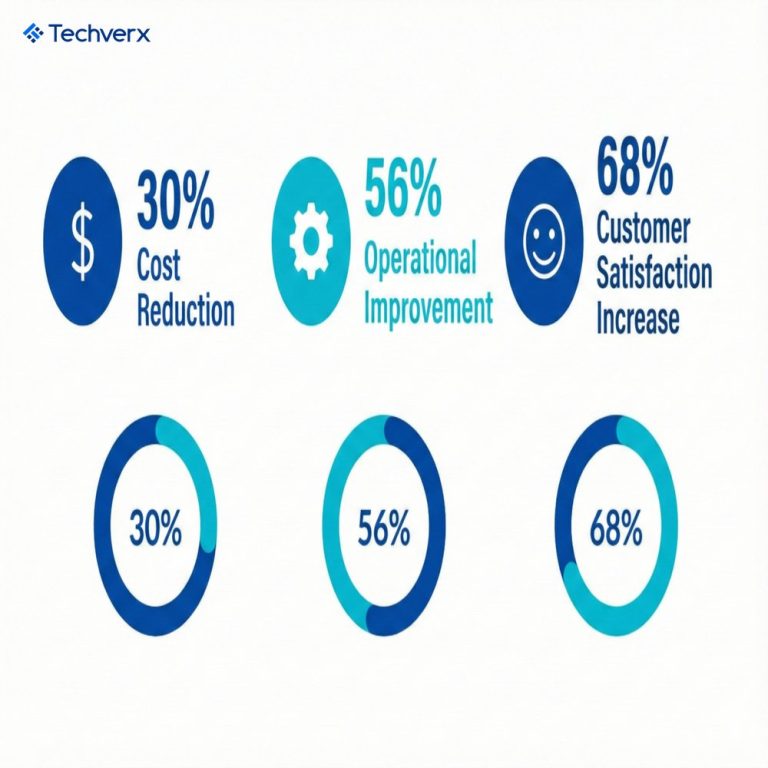
The global hyperautomation market is projected to grow from $12.95 billion in 2024 to $31.95 billion by 2029. Organizations implementing hyperautomation report reducing operational costs by 30% while improving service quality and responsiveness. By 2026, 30% of enterprises will automate more than half of their network activities, up from under 10% in mid-2023.
What Makes Hyperautomation Different
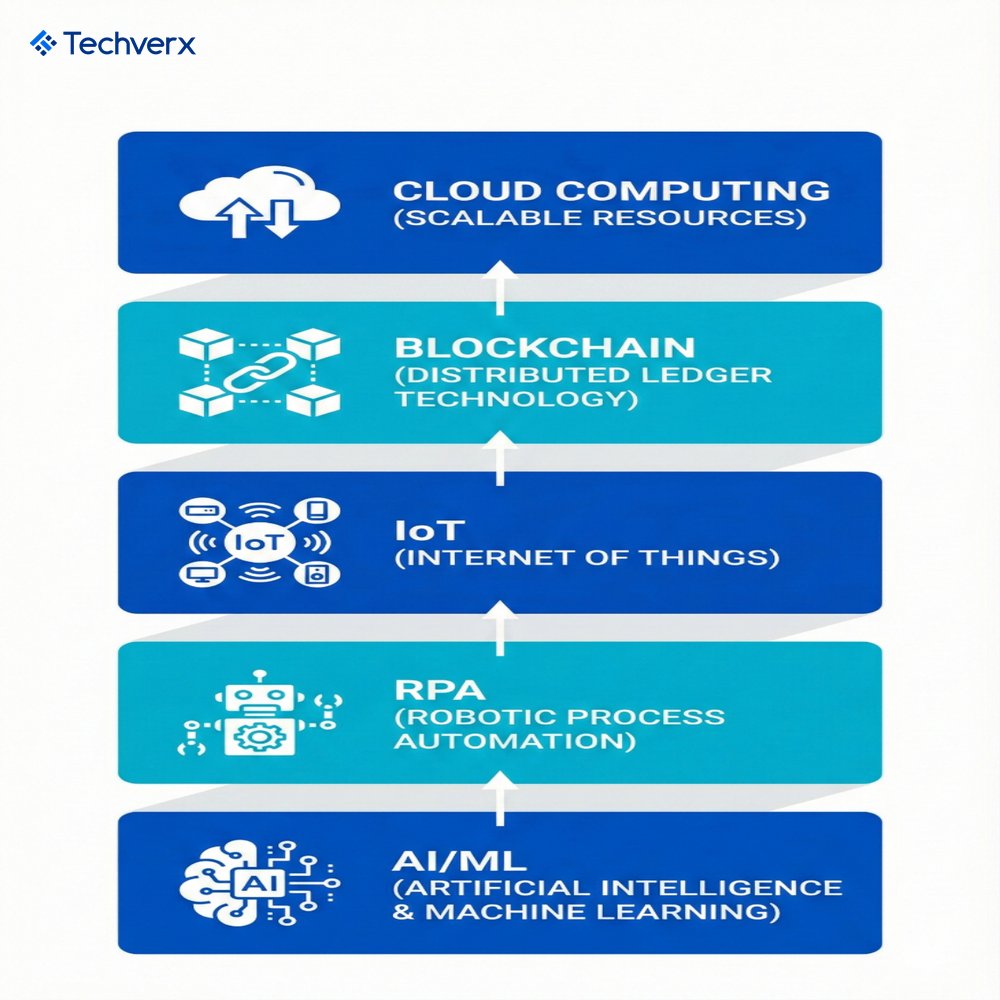
Hyperautomation combines Robotic Process Automation (RPA), Artificial Intelligence (AI), Machine Learning (ML), Internet of Things (IoT), and advanced analytics into a unified, intelligent system. Unlike traditional automation that handles repetitive tasks, hyperautomation creates “digital workers” that process unstructured data, understand context, and make decisions previously requiring human expertise.
For retail, every supply chain element becomes interconnected. Demand forecasting systems communicate directly with procurement platforms. Warehouse robots coordinate with transportation management. Customer sentiment analysis influences inventory allocation in real-time. The entire supply chain operates as a responsive organism rather than separate processes.
Technologies Driving Supply Chain Transformation
AI & Machine Learning for Demand Forecasting and Predictive Analytics
AI and Machine Learning predict demand by analyzing sales data, market trends, weather patterns, and social media sentiment. A retail chain might predict umbrella demand spikes based on weather forecasts, automatically triggering stock transfers before customers consider purchasing. ML algorithms continuously refine predictions, learning from errors and improving accuracy by 20–40%.
Robotic Process Automation (RPA) for Order and Inventory Management
Robotic Process Automation executes countless repetitive tasks. RPA bots process orders, update inventory, generate shipping documentation, and reconcile invoices without human intervention. When customers order online, RPA validates payment, checks inventory across warehouses, selects optimal fulfillment locations, and generates pick lists, within seconds. The global RPA market is projected to reach $13.74 billion by 2028.
Internet of Things (IoT) for Real-Time Inventory and Logistics Monitoring
Internet of Things provides real-time data through sensors monitoring inventory levels, equipment performance, and product movement. Smart shelves detect low stock. Temperature sensors ensure cold chain compliance. GPS trackers monitor shipments. If refrigerated truck temperatures rise, systems automatically alert managers, reroute shipments, and update delivery schedules, preventing spoilage before it occurs.
Blockchain Technology for Supply Chain Transparency and Traceability
Blockchain Technology ensures transparency across complex supply chains. Every transaction is recorded in an immutable ledger, providing verifiable proof of origin and compliance. For retailers selling organic or regulated products, blockchain enables instant verification of authenticity and sourcing practices.
Cloud Computing for Scalable and Agile Retail Operations
Cloud Computing provides scalable infrastructure without massive capital investments. Cloud platforms process massive data volumes, run complex AI models, and scale operations based on seasonal demand, making advanced capabilities accessible to retailers of all sizes.
Operational Transformation Enabled by Hyperautomation
Enhanced Supply Chain Visibility Through Real-Time Dashboards
Enhanced Visibility: Real-time dashboards show inventory across locations, shipments in transit, supplier performance, and demand patterns. When viral social media drives sudden demand, hyperautomated systems detect surges, adjust forecasts, expedite orders, and reallocate inventory, automatically.
Logistics Optimization Using AI-Driven Route Planning
Logistics Optimization: Last-mile delivery represents up to 53% of shipping costs. AI algorithms analyze traffic, weather, and delivery locations to optimize routes in real-time. When delays occur, systems recalculate routes and update delivery windows instantly. One retailer implemented virtual dispatcher agents, achieving $30–35 million in annual savings with $2 million investment.
Intelligent Inventory Management Powered by AI
Intelligent Inventory: AI analyzes sales velocity, seasonal patterns, and external factors like competitor pricing to determine optimal stock levels. Systems automatically generate purchase orders, negotiate pricing, and schedule deliveries. Overstock triggers promotional pricing or location transfers. Retailers report 20–30% reductions in carrying costs while improving availability.
Streamlined Procurement and Supplier Automation
Streamlined Procurement: RPA bots validate suppliers, check compliance, generate purchase orders, and process invoices automatically. AI evaluates supplier performance and suggests alternatives when issues arise, compressing multi-week processes into hours.
Automated Customer Experience and Proactive Support
Customer Experience: Order confirmations, tracking, and exception handling occur automatically. Conversational AI provides instant, accurate responses 24/7. When issues arise, systems proactively alert customers and initiate solutions before complaints occur.
See Hyperautomation in Action
Discover how AI-driven workflows and connected systems can streamline planning, inventory, and fulfillment from end to end.
Measurable Business Impact of Hyperautomation
Operational Efficiency and Cost Reduction at Scale
Research shows 56% of retailers report improved operational effectiveness through intelligent automation. Cost reduction averages 30% across organizations redesigning processes with hyperautomation. These savings come from reduced labor costs, fewer errors, optimized inventory, and improved supplier negotiations.
Accuracy, Customer Satisfaction, and Forecasting Improvements
Accuracy improvements are equally significant, 68% report measurable customer satisfaction increases from faster response times and consistent service quality. Forecast accuracy improvements of 20–40% directly reduce stockouts and excess inventory.
Scalable Operations for Peak Demand and Growth
Scalability is critical. Hyperautomated systems handle 100 or 100,000 transactions with equal efficiency. During peak seasons, systems scale automatically without temporary staff or overtime costs.
Implementation Strategy
Assessment and Planning: Document current workflows, identify bottlenecks, and quantify inefficiencies. Organizations conducting comprehensive assessments are 40% more likely to succeed. Define clear objectives—reducing order processing time by 50%, improving forecast accuracy by 30%, or cutting costs by specific percentages.
Technology Selection: Choose platforms integrating with existing retail systems—ERP, inventory management, e-commerce, and transportation. Prioritize seamless API integration, cloud-based scalability, and retail-specific workflows. Organizations prioritizing compatibility experience 30% fewer disruptions.
Pilot Projects: Start with high-impact, low-complexity use cases. Automate invoice processing, implement smart inventory alerts, or deploy AI forecasting for a single category. Organizations starting with pilots and iterating are 50% more likely to achieve long-term success.
Change Management: Communicate benefits clearly, provide comprehensive training, and establish support systems. Research indicates 62% of executives believe workforce retraining is critical. Organizations investing in change management see faster adoption and higher satisfaction.
Addressing Challenges
Technical Complexity: Invest in robust cloud infrastructure and continuous IT training. Partner with experienced specialists to navigate integration challenges.
Data Security: Implement encryption, access controls, and intrusion detection. Ensure compliance with GDPR and CCPA through regular audits.
Cost Justification: Conduct cost-benefit analyses capturing direct savings and indirect benefits. Start with focused implementations delivering quick wins.
Workforce Transition: Address concerns through transparent communication and reskilling programs preparing teams for strategic, analytical work.
What Productivity Gains Look Like in Day-to-Day Work
Generative AI will further enhance capabilities, enabling systems to design optimized supply chain architectures and deliver actionable insights through natural language interfaces. Edge computing will extend AI processing to warehouses and stores, enabling real-time decision-making with minimal latency.
Hyperautomation is more than a technology shift, it is a strategic necessity for retail survival. Customer expectations continue to rise, margins remain compressed, and competitive pressure intensifies. Retailers that adopt hyperautomation operate with superior economics while consistently delivering better customer experiences.
The question is no longer whether to implement hyperautomation, but how quickly it can be executed. Customers already expect it. Competitors are actively building it. The technology is proven, scalable, and accessible today.
The time to transform your retail supply chain is now.
FAQs
What is end-to-end hyperautomation in retail?
It refers to automating the entire retail supply chain using AI, RPA, analytics, and system integrations to optimize processes and decisions.
How does hyperautomation improve supply chain agility?
It enables real-time visibility, predictive insights, and automated responses to demand changes and disruptions.
Is hyperautomation only for large retailers?
No, mid-market and growing retailers can adopt hyperautomation incrementally for faster ROI.
What technologies enable hyperautomation?
AI, machine learning, robotic process automation (RPA), ERP integrations, APIs, and real-time analytics.
What are the biggest benefits for retailers?
Reduced costs, faster fulfillment, improved accuracy, better forecasting, and resilient operations.

Hannah Bryant
Hannah Bryant is the Strategic Partnerships Manager at Techverx, where she leads initiatives that strengthen relationships with global clients and partners. With over a decade of experience in SaaS and B2B marketing, she drives integrated go-to-market strategies that enhance brand visibility, foster collaboration, and accelerate business growth.
Hiring engineers?
Reduce hiring costs by up to 70% and shorten your recruitment cycle from 40–50 days with Techverx’s team augmentation services.
Related blogs