Table Of Content
How Control Tower is Transforming Modern Supply Chains

Why Modern Supply Chains Need a Smarter Approach
If you’ve ever ordered something online and watched the delivery date keep shifting, you’ve felt the ripple effect of a supply chain under stress. Behind the scenes, companies are juggling hundreds of suppliers, warehouses, shipping routes, and demand fluctuations, often with very little real-time visibility into what’s actually happening.
That’s exactly where a supply chain control tower comes in.
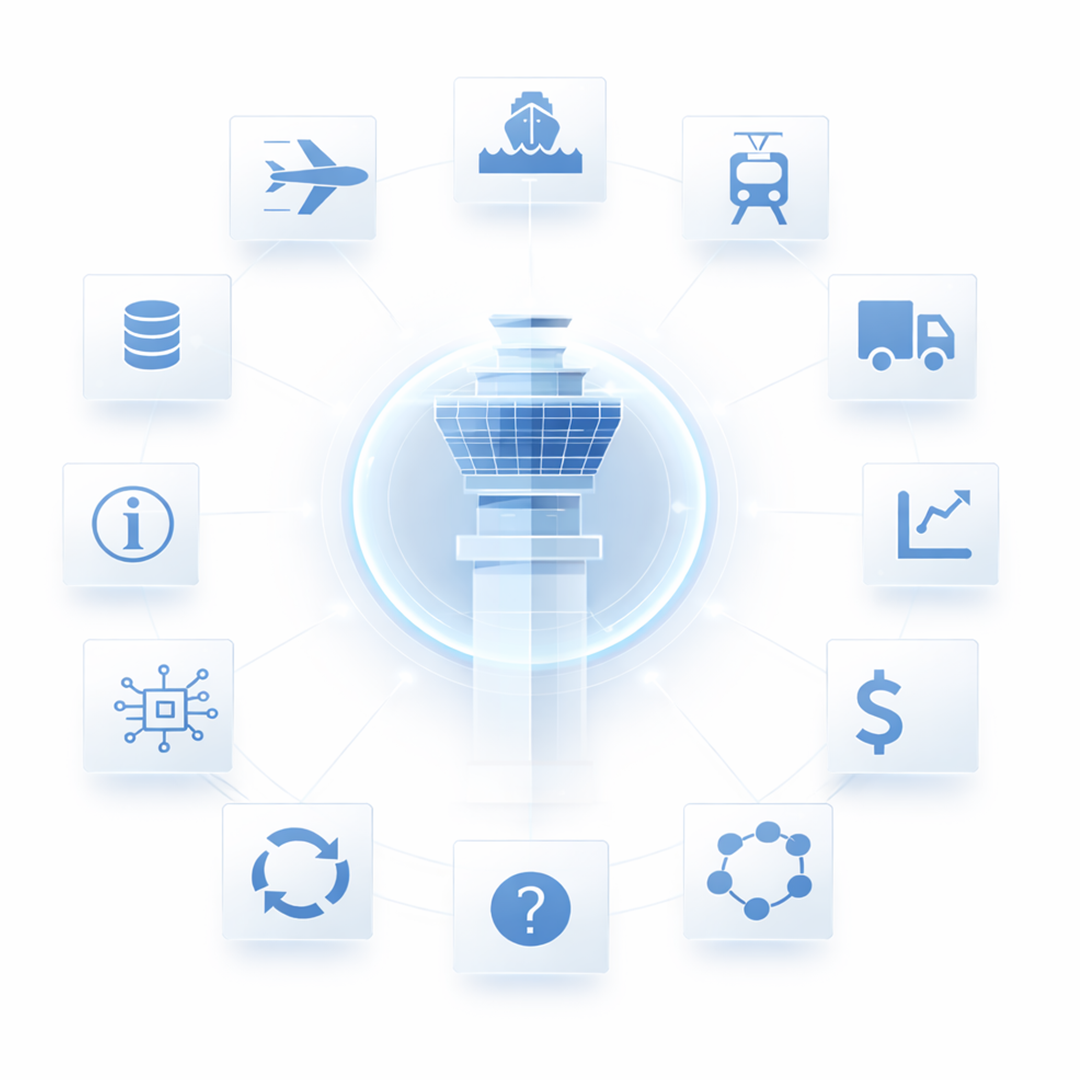
Think of it like an air traffic control system, but for your entire supply chain. It gives operations teams a centralized, connected view of everything moving through their network, helping them spot problems before they snowball and make faster, smarter decisions. In a world where disruptions are no longer the exception but the rule, this kind of capability isn’t just nice to have. It’s a competitive necessity.
In this post, we’ll break down what a supply chain control tower actually is, how it works, the different types available, and why businesses across industries are making it a core part of their digital transformation strategy.
What Is a Supply Chain Control Tower?
A supply chain control tower is a connected, personalized dashboard that pulls together data, key business metrics, and events from across your entire supply chain, giving you the ability to understand, prioritize, and resolve critical issues in real time.
At its core, it’s about breaking down data silos. Most companies have supply chain data scattered across multiple systems: their ERP, their warehouse management software, their logistics platforms, third-party supplier portals, and more. A control tower ties all of that together into a single, coherent view.
But a modern control tower goes beyond just dashboards. Powered by artificial intelligence (AI) and machine learning, today’s control towers don’t just show you what’s happening, they help you predict what’s going to happen. They surface actionable recommendations, flag potential disruptions before they occur, and enable collaboration across teams and trading partners in ways that weren’t possible before.
"A smarter control tower enables collaboration across teams and trading associates and preserves organizational knowledge to improve and accelerate decision-making and outcomes."
IBM
The Key Capabilities That Make Control Towers So Powerful
So what does a supply chain control tower actually do on a day-to-day basis? Here are the core capabilities that make the biggest difference:
Real-Time, End-to-End Visibility
One of the biggest pain points in supply chain management is the lack of visibility, not just into your own operations, but into your suppliers, carriers, and last-mile delivery partners. A control tower correlates data across all of these siloed systems and external events, giving you personalized dashboards that surface exactly what needs your attention right now.
This means you’re no longer reacting to problems after the fact. You can see a potential supplier delay forming three weeks out and get ahead of it before it impacts your customers.
Predictive and Prescriptive Decision Support
With AI and machine learning built in, a control tower doesn’t just tell you there’s a problem, it tells you what to do about it. Smart alerts and real-time insights help you understand the upstream and downstream impact of any given event, so you can prioritize your response intelligently rather than fighting fires in a reactive, ad hoc way.
Collaborative Information Sharing
Supply chain problems rarely live inside one team. A good control tower makes it easy for procurement, logistics, operations, and sales teams to work from the same data, share resolution plans, and execute faster. AI-powered resolution workflows and digital playbooks can dramatically reduce the time it takes to respond to unplanned events, from hours or days to minutes.
The Different Types of Supply Chain Control Towers
Not every business needs the same type of control tower. Depending on your industry and operational focus, there are several specialized versions available:
- Logistics and Transportation Control Towers, Focused on inbound and outbound movement. Provides track-and-trace, advance shipping notifications, and delivery data to keep freight flowing smoothly.
- Fulfillment Control Towers, Built for e-commerce and retail operations. Helps expedite order fulfillment while keeping cost-to-serve in check.
- Inventory Control Towers, Provides real-time inventory insights across locations, with a strong emphasis on preventing stockouts and shortages before they hit.
- Supply Assurance Control Towers, Ensures adequate supply is on hand and that future supply is properly planned and on track.
- End-to-End (E2E) Supply Chain Control Towers, The most comprehensive option, providing visibility across both internal and external systems and processes, spanning multiple departments or entities across the entire value chain.
For most enterprise-level businesses dealing with complex, global supply chains, the E2E model is increasingly becoming the gold standard.
How Industries Are Putting Control Towers to Work
The value of a supply chain control tower isn’t theoretical, it’s showing up in measurable outcomes across real industries.
Healthcare:
organizations, for example, lose as much as 10% of their inventory value annually due to lost or misplaced equipment and supplies. A control tower gives hospitals real-time visibility into critical medical inventory, ensuring the right equipment is in the right place when patient care demands it most.
Grocery retailers:
face constant pressure to keep shelves stocked against unpredictable demand spikes and supply disruptions. With expanded inventory visibility extending beyond warehouses into in-store locations and in-transit supply, control towers help grocers stay ahead of shortages instead of scrambling after they happen.
Industrial and manufacturing companies use control towers to meet service contract SLAs while keeping inventory carrying costs lean, getting granular visibility into spare parts by SKU and stocking location across multiple systems.
If you’re curious how these principles apply to your specific industry, our team at Techverx can walk you through what a tailored solution might look like.
Key Considerations Before Deploying a Control Tower
Deploying a supply chain control tower is a significant undertaking, and getting it right requires attention to a few critical factors:
Data Quality:
A control tower is only as good as the data flowing into it. Poor data quality leads to unreliable insights and missed alerts. Before deployment, it’s worth auditing your existing data pipelines and ensuring that the inputs coming from various systems are clean, consistent, and timely.
Actionable Outputs:
Data is only useful if it drives action. The best control tower implementations are designed with end-users in mind, ensuring that insights are presented in a clear, actionable way rather than buried in complex dashboards that require a data scientist to interpret.
Change Management:
Perhaps the most underestimated challenge. Introducing a control tower means changing how teams work, how decisions get made, and how information flows across the organization. That requires leadership buy-in, clear communication, and a phased rollout plan that brings people along rather than overwhelming them.
Transform Your Supply Chain with a Control Tower
Gain unmatched visibility and proactive decision-making by implementing AI-enabled control tower solutions designed for modern operations.
The Role of AI in the Next Generation of Control Towers
If today’s control towers are powerful, AI is what makes the next generation genuinely transformative.
We’re already seeing AI being used to predict supply disruptions days or weeks before they materialize, analyzing signals from supplier financial health, weather patterns, geopolitical events, and port congestion simultaneously. Machine learning models are improving demand forecasting accuracy, reducing the need for safety stock and the working capital tied up in it.
Looking ahead, agentic AI, AI systems that can autonomously take defined actions rather than just surfacing recommendations, is beginning to appear in supply chain operations. Early applications include automatically re-routing shipments when delays are detected, triggering purchase orders when inventory drops below thresholds, and escalating exceptions to the right team member based on severity and context.
At Techverx, we’ve been helping businesses integrate AI and advanced data capabilities into their operations. See how our AI and data solutions are helping companies build supply chains that are faster, smarter, and more resilient.
Is Your Supply Chain Ready for a Control Tower?
Supply chains have always been complex. But the combination of global disruptions, rising customer expectations, and the sheer volume of data that modern logistics generates has made “flying blind” simply not an option anymore.
A supply chain control tower gives you the visibility, intelligence, and collaboration tools to run your operations proactively rather than reactively. Whether you’re dealing with inventory gaps, supplier delays, fulfillment bottlenecks, or all of the above, the right control tower can be the difference between a disruption that costs you customers and one you resolve before it ever reaches them.
If you’re ready to explore what a supply chain control tower could mean for your business, reach out to the Techverx team today. We’ll help you assess where you are, where you need to be, and the most pragmatic path to get there.
FAQs - Supply Chain Technical Debt
What is a supply chain control tower and how does it work?
A supply chain control tower is a centralized platform that aggregates data from across your supply chain, including suppliers, logistics partners, warehouses, and customer systems, into a unified, real-time dashboard. It uses AI and machine learning to surface actionable insights, predict disruptions, and support faster decision-making across teams.
What's the difference between a logistics control tower and an E2E supply chain control tower?
A logistics control tower focuses specifically on transportation and freight visibility, tracking shipments, delivery milestones, and carrier performance. An end-to-end (E2E) supply chain control tower takes a broader view, covering everything from raw material sourcing and supplier management to fulfillment and last-mile delivery across the entire value chain.
How does AI improve supply chain control tower performance?
AI enables control towers to move from reactive monitoring to predictive intelligence. Instead of simply flagging problems that have already occurred, AI-powered control towers can identify patterns and signals that indicate a disruption is likely to happen, giving teams time to intervene before the impact is felt. AI also powers automated recommendations, resolution playbooks, and increasingly, autonomous actions.
What industries benefit most from supply chain control towers?
While virtually any business with a complex supply chain can benefit, industries that typically see the greatest ROI include retail and e-commerce, grocery, healthcare, industrial manufacturing, and logistics and third-party providers. High-volume, time-sensitive operations with multiple touchpoints tend to gain the most from real-time supply chain visibility.
How long does it take to implement a supply chain control tower?
Implementation timelines vary based on the complexity of your existing systems, data infrastructure, and the scope of the control tower being deployed. A focused, single-function deployment (like an inventory control tower) can be operational in a matter of months, while a full E2E implementation may take longer and be rolled out in phases. Working with an experienced technology partner can significantly accelerate the process and reduce risk.

Hannah Bryant
Hannah Bryant is the Strategic Partnerships Manager at Techverx, where she leads initiatives that strengthen relationships with global clients and partners. With over a decade of experience in SaaS and B2B marketing, she drives integrated go-to-market strategies that enhance brand visibility, foster collaboration, and accelerate business growth.
Hiring engineers?
Reduce hiring costs by up to 70% and shorten your recruitment cycle from 40–50 days with Techverx’s team augmentation services.
Related blogs